Conditions & Care
Dr. Devi evaluates and treats patients with a range of cognitive and neurological conditions. Every patient receives a comprehensive neurological evaluation, including a thorough history, examination, and — where clinically indicated — neurocognitive testing and neuroimaging.
Alzheimer's Disease & Dementia
Alzheimer's disease is the most common cause of dementia, but not the only one. Dr. Devi has spent her career focused on accurate diagnosis — distinguishing Alzheimer's from other dementias, from normal aging, and from reversible causes of cognitive decline that are frequently misattributed.
Her approach emphasizes individualized evaluation and careful interpretation of biomarker testing, including the prognosis and treatment implications of emerging therapies.
Memory Loss & Cognitive Decline
Memory concerns are among the most common reasons patients seek neurological evaluation. They are also among the most frequently mischaracterized — attributed too quickly to Alzheimer's disease, or dismissed too readily as normal aging.
Dr. Devi evaluates memory complaints carefully, distinguishing neurodegenerative causes from those related to sleep, mood, medications, menopause, or other treatable conditions.
Dementia Risk Reduction
For patients with a family history of dementia, known genetic risk factors such as APOE ε4, or subjective concern about future cognitive decline, Dr. Devi offers individualized risk assessment and evidence-based strategies for risk reduction.
This includes evaluation of modifiable risk factors — cardiovascular health, sleep, metabolic status, medications, and lifestyle — as well as guidance on when biomarker testing is appropriate and when it is not.
Menopause-Related Cognitive Loss
Cognitive symptoms during perimenopause and menopause — memory lapses, word-finding difficulty, mental fog — are common, frequently distressing, and often misdiagnosed. Dr. Devi was among the first to define menopause-related cognitive impairment as a distinct clinical condition and has published and lectured extensively on its diagnosis and treatment.
Many patients with these symptoms are referred to neurologists and told they may have early Alzheimer's. Accurate diagnosis requires understanding the impact of hormonal transition on cognition and distinguishing it from neurodegenerative disease.
Concussion & Post-Concussive Syndrome
Concussion is a complex neurological event that is frequently undertreated. Post-concussive symptoms — including cognitive difficulty, headache, sleep disruption, and mood changes — can persist for weeks, months, or longer, particularly when not properly managed in the acute phase.
Dr. Devi evaluates patients with acute concussion and those with persistent post-concussive symptoms, including patients who have seen other specialists without resolution of their symptoms.
Chronic Pain
Chronic pain is a neurological condition as much as a physical one. Dr. Devi is board-certified in Pain Medicine and brings a neurological perspective to the evaluation and management of chronic pain, including neuropathic pain, pain associated with neurological conditions, and complex cases that have not responded to prior treatment.
Migraines & Headaches
Migraine is the most common neurological condition worldwide and among the most undertreated. Dr. Devi evaluates patients with migraine, chronic daily headache, and complex or refractory headache disorders, with particular attention to the relationship between migraine, stroke risk, and hormonal status in women.
Complex Neurological Conditions
Many patients arrive at Park Avenue Neurology after seeing other specialists without a clear diagnosis or after a diagnosis they found unsatisfying. Complex, unresolved, or multifactorial neurological cases are a particular focus of the practice.
Dr. Devi's training across neurology, psychiatry, and behavioral neurology allows her to evaluate the full range of disorders affecting brain function — including conditions that present at the intersection of neurology and psychiatry, or that do not fit neatly into a single diagnostic category.
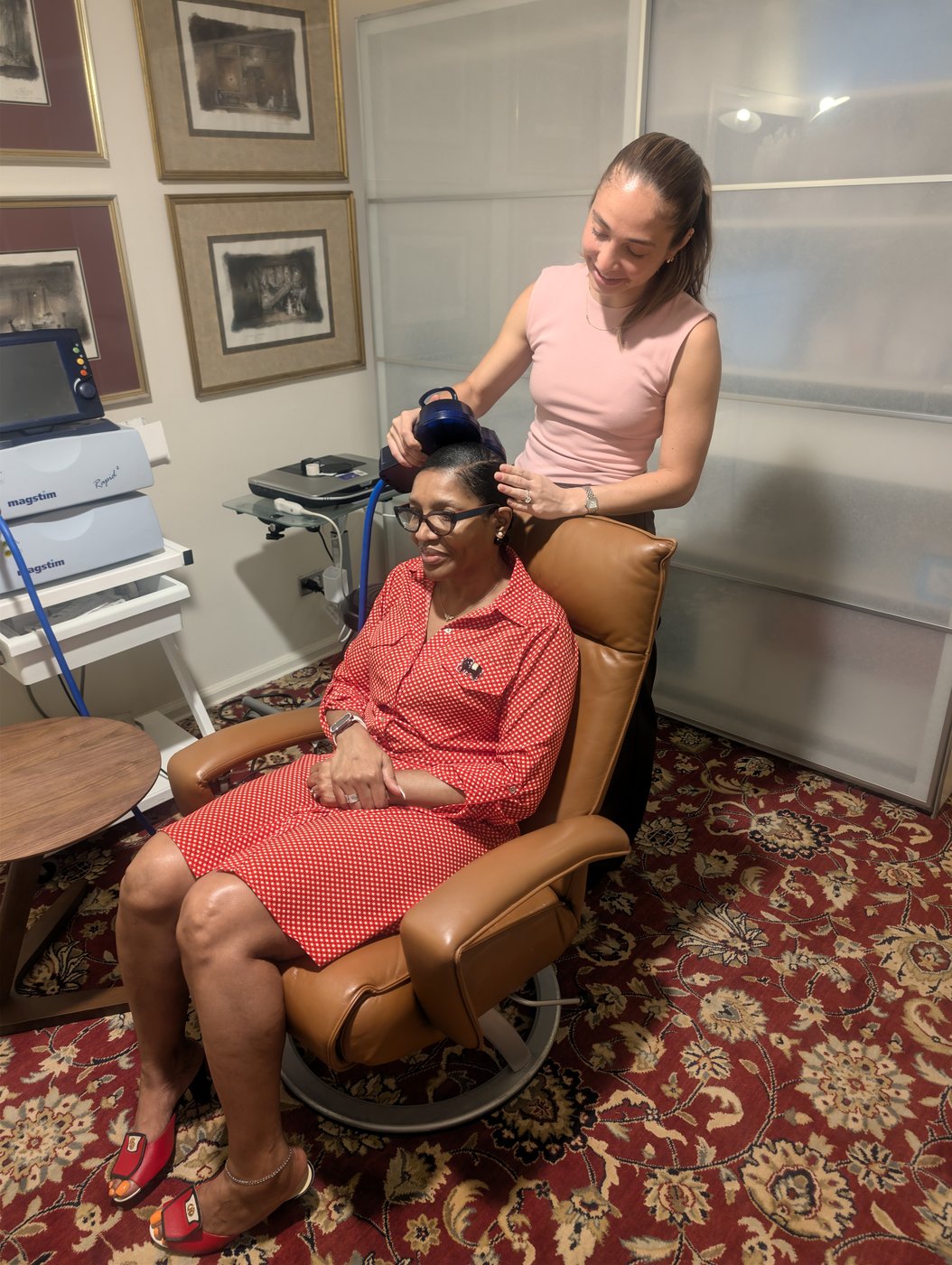
Procedures & Treatments
Diagnostic and therapeutic procedures at Park Avenue Neurology are administered by Dr. Devi and her clinical team.